
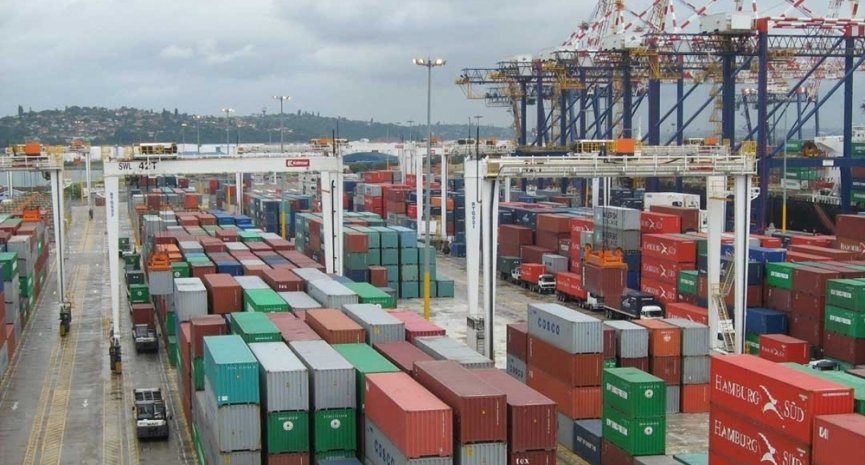
Durban port delays are becoming a growing concern for shipping lines, freight forwarders, importers and exporters as congestion at Durban Gateway Terminal continues to affect cargo movement. Reports indicate that some shipments are already experiencing delays of around 10 days, while certain carriers are warning customers to prepare for disruptions that could extend to 20 days.
For businesses dependent on reliable international shipping, such delays can quickly translate into higher logistics costs, inventory problems and missed delivery schedules. At Global Africa Logistics (GAL), we closely monitor developments affecting major African ports and global trade routes, helping businesses plan freight forwarding, ocean freight, customs clearance and inland transportation more effectively.
The situation at Durban is particularly important because the port serves as a major gateway for South African and regional trade. If the current operational difficulties persist, the consequences could extend beyond the terminal itself and affect connected road, rail, warehousing and distribution networks.
Durban Gateway Terminal Delays Continue to Affect Cargo
The latest Durban Gateway Terminal delays have created significant uncertainty for cargo owners and freight forwarders.
Industry sources indicate that Pier 2 is experiencing substantial operational constraints. While approximately 10-day delays have been reported, individual services are understood to be considerably further behind.
This means that there is no single waiting time that applies to every shipment.
The actual delay can depend on factors such as:
- Vessel arrival schedules
- Container discharge timing
- Terminal productivity
- Cargo availability
- Equipment availability
- Trucking capacity
- Yard congestion
- Shipping-line operations
For importers, this uncertainty makes it increasingly difficult to establish reliable delivery dates.
Carriers Warn of 20-Day Shipping Delays
One of the most concerning developments is that some carriers are now warning customers about 20-day shipping delays.
A delay of this magnitude can have serious consequences for businesses operating time-sensitive supply chains.
Importers may face difficulties maintaining inventory, while manufacturers could experience shortages of essential raw materials, components or equipment.
Exporters can also be affected if containers are not processed or moved according to planned schedules.
The consequences of prolonged Durban shipping delays can include:
- Longer cargo transit times
- Increased inventory costs
- Disrupted production schedules
- Delayed customer deliveries
- Additional storage expenses
- Trucking rescheduling
- Warehouse planning problems
- Cash-flow pressure
- Reduced supply-chain reliability
For businesses already working with tight delivery windows, another two or three weeks can make a significant commercial difference.
Durban Container Delays Are Creating a Growing Backlog
The growing Durban container delays are also contributing to a wider cargo backlog.
Industry sources have indicated that containers discharged around August 11 were still waiting to be processed within the terminal.
When containers remain at a terminal for an extended period, importers need to monitor storage arrangements and free-time conditions carefully.
Shipping lines and terminal operators may introduce temporary measures to help cargo owners manage the situation, but businesses should not assume that such arrangements will continue indefinitely.
The longer the backlog remains unresolved, the greater the risk that incoming cargo will add further pressure to terminal capacity.
What Is Causing the Durban Port Delays?
The current disruption appears to be the result of several factors rather than one isolated problem.
One important development has been the transition involving International Container Terminal Services, Inc. (ICTSI), which acquired a 49% stake in Durban Gateway Terminal earlier in 2026.
The investment followed South Africa’s decision to increase private-sector participation in port operations.
The broader objective of private-sector involvement is to improve operational efficiency and address longstanding problems affecting port infrastructure and cargo handling.
However, operational transitions can also create short-term challenges.
New Systems and Workforce Training Add Pressure
The introduction of new terminal operating systems requires changes to established procedures.
Workers may need training on new technology, documentation processes, equipment interfaces and cargo-handling workflows.
During such transitions, productivity can temporarily be affected while employees and management teams adapt.
At a terminal already dealing with significant cargo volumes, even a temporary reduction in productivity can contribute to longer queues and increasing container backlogs.
This appears to be an important consideration when assessing the latest Durban Gateway Terminal delays.
The key challenge now is restoring productivity quickly enough to handle both existing cargo and new vessel arrivals.
Durban’s Port Problems Have Been Building for Years
The current Port of Durban delays should also be viewed against a much broader background.
South Africa has faced longstanding challenges involving port infrastructure, equipment availability, operational productivity and cargo handling.
These challenges have periodically contributed to congestion and longer vessel and container turnaround times.
The latest disruption therefore does not exist in isolation.
Instead, it is occurring while international shipping networks are already dealing with considerable geopolitical and operational uncertainty.
Red Sea Rerouting Is Adding Pressure to Global Shipping
One major factor affecting international shipping has been the continued disruption around the Red Sea.
Many container carriers have adjusted their routes to avoid the area, with vessels sailing around the Cape of Good Hope instead of using the Suez Canal.
This creates longer voyages between major trading regions.
Longer voyages consume additional vessel time and can reduce effective fleet capacity.
The resulting network changes can contribute to:
- Longer transit times
- Higher operating costs
- Vessel schedule changes
- Container imbalances
- Port congestion
- Equipment shortages
- Higher freight rates
For African ports, these changes can create additional pressure when vessel schedules become less predictable.
Strait of Hormuz Disruption Adds Further Uncertainty
The international maritime environment has become even more complicated because of disruption affecting the Strait of Hormuz.
Major maritime chokepoints play an important role in global supply chains.
When shipping routes become restricted or risky, carriers may adjust vessel deployment, sailing schedules and routing strategies.
These changes can have consequences far away from the original disruption.
For freight forwarders and cargo owners, this means that a problem in one maritime corridor can ultimately affect shipping schedules and port operations in another region.
How Durban Shipping Delays Could Affect African Trade
The impact of the current disruption could extend beyond South Africa.
Durban is an important gateway for regional trade, connecting maritime cargo with inland markets through road and rail networks.
When containers remain at the terminal longer than expected, the disruption can spread through the wider logistics chain.
For example, a delayed container can affect:
Vessel → Terminal → Customs → Trucking → Warehouse → Distribution → Final Customer
A delay at the terminal can therefore create delays at every subsequent stage.
This is why shipping delays in Africa need to be considered from a supply-chain perspective rather than simply as a port problem.
Durban Supply Chain Disruption Could Affect Importers
Businesses importing through Durban should closely monitor their cargo status and avoid relying exclusively on original estimated delivery dates.
Companies with urgent or high-value shipments should review their inventory position and consider whether alternative transportation arrangements are necessary.
Importers should also confirm:
- Container status
- Free storage time
- Expected availability date
- Customs requirements
- Trucking arrangements
- Warehouse capacity
- Final delivery schedule
Early communication can help businesses respond before a delay becomes a larger operational problem.
Exporters Should Also Prepare for Disruption
The impact of the current situation is not limited to import cargo.
Exporters can experience Durban shipping delays when containers are affected by terminal capacity, vessel schedules or equipment availability.
A missed sailing can push cargo into a later departure and potentially create additional costs.
Businesses exporting from South Africa should therefore monitor carrier schedules and terminal requirements carefully.
Where shipment deadlines are commercially important, contingency planning should be established before cargo reaches the port.
Could Durban Port Delays Continue?
The duration of the current disruption remains uncertain.
The speed of recovery will depend partly on whether terminal productivity improves sufficiently to clear the existing backlog.
The situation becomes more difficult if new vessels and containers arrive faster than the terminal can process them.
In that scenario, the backlog could continue growing.
If operational performance improves and incoming volumes remain manageable, however, the terminal could gradually work through the accumulated cargo.
For now, businesses should therefore prepare for continued volatility rather than assume an immediate return to normal operations.
What Businesses Can Do About Durban Port Delays
Businesses affected by Durban port delays can take several practical steps to reduce the operational impact.
Monitor shipments frequently
Do not rely solely on the original estimated arrival or delivery date. Obtain updated information from the carrier, terminal or freight forwarder.
Review free-time arrangements
Confirm how many free storage days apply to your shipment and whether any temporary extensions are available.
Coordinate trucking early
Truck availability can become more difficult when a large number of containers are released simultaneously.
Review inventory levels
Companies relying on imported materials should assess whether current stock can absorb additional delays.
Evaluate alternative routes
Depending on cargo origin, destination, urgency and cost, alternative ports or transportation options may be worth evaluating.
Maintain communication with your freight forwarder
A freight forwarder can coordinate information between shipping lines, terminals, customs authorities, trucking providers and cargo owners.
What the Crisis Means for Freight Forwarding
The current situation demonstrates why modern freight forwarding requires more than simply booking a vessel.
Freight forwarders need to monitor changing conditions across the entire logistics chain.
That includes:
- Port congestion
- Carrier schedules
- Vessel availability
- Container availability
- Terminal operations
- Customs procedures
- Inland transportation
- Alternative routing
- Global shipping disruptions
For businesses trading internationally, this broader visibility can help identify potential problems before they become expensive disruptions.
What African Shippers Should Learn From Durban
The current situation offers an important lesson for businesses across Africa.
Port disruptions can occur even when cargo has already arrived safely at its destination.
Therefore, logistics planning should include contingency measures for:
- Port congestion
- Vessel delays
- Terminal disruption
- Inland transportation problems
- Customs delays
- Equipment shortages
- Geopolitical disruptions
Businesses that depend on a single route or a single port may be particularly vulnerable when unexpected disruptions occur.
Diversification and proactive planning can improve supply-chain resilience.
How GAL Helps Businesses Navigate Shipping Disruptions
At Global Africa Logistics (GAL), we understand that international cargo movement does not always go according to schedule.
Our team supports businesses with freight forwarding, ocean freight, customs clearance, inland transportation and import-export logistics.
We help businesses evaluate available transportation options and coordinate cargo movement from origin to destination.
For companies trading between Africa, Asia, Europe, North America and other global markets, GAL can help simplify complex logistics requirements while providing greater visibility throughout the shipping process.
Whether you are moving full containers, smaller consignments or commercial cargo, having an experienced logistics partner can make it easier to respond when ports and shipping networks experience disruption.
Conclusion: Durban Port Delays Highlight the Need for Supply-Chain Planning
The latest Durban port delays demonstrate how quickly terminal operational challenges can affect international supply chains.
With reports of approximately 10-day delays and some carriers warning customers about disruptions of up to 20 days, businesses using Durban should closely monitor their shipments and prepare for continued uncertainty.
The situation appears to involve multiple factors, including terminal operational challenges, the introduction of new systems, workforce adjustments, existing infrastructure limitations and wider disruptions affecting international shipping routes.
For importers and exporters, the most important lesson is that effective logistics planning must account for uncertainty.
Businesses can reduce their exposure to disruption by monitoring shipments, reviewing alternative routing options, maintaining appropriate inventory buffers and working closely with experienced freight-forwarding partners.
At Global Africa Logistics (GAL), we provide freight forwarding, ocean freight, customs clearance and inland transportation solutions designed to help businesses manage international cargo more efficiently.
If your business is affected by Durban shipping delays, changing vessel schedules or wider disruptions in global trade, GAL can help you evaluate practical logistics options.
Contact Global Africa Logistics today to discuss your shipment requirements and discover the right solution for your cargo.
